Where capital finds
its strongest ground.
The Midwest is not a consolation prize. It is where fundamentals are intact, valuations are rational, and population migration is quietly creating the next generation of multifamily demand.
Target States
2020–2024
Year-Over-Year
National Cap Rate Avg.
Six cities reshaping the Midwest investment landscape.
Each market below has been selected through Terra's rigorous underwriting criteria — combining population trends, employment diversification, rent-to-income ratios, and supply pipeline data to identify where multifamily demand is structurally outpacing supply.

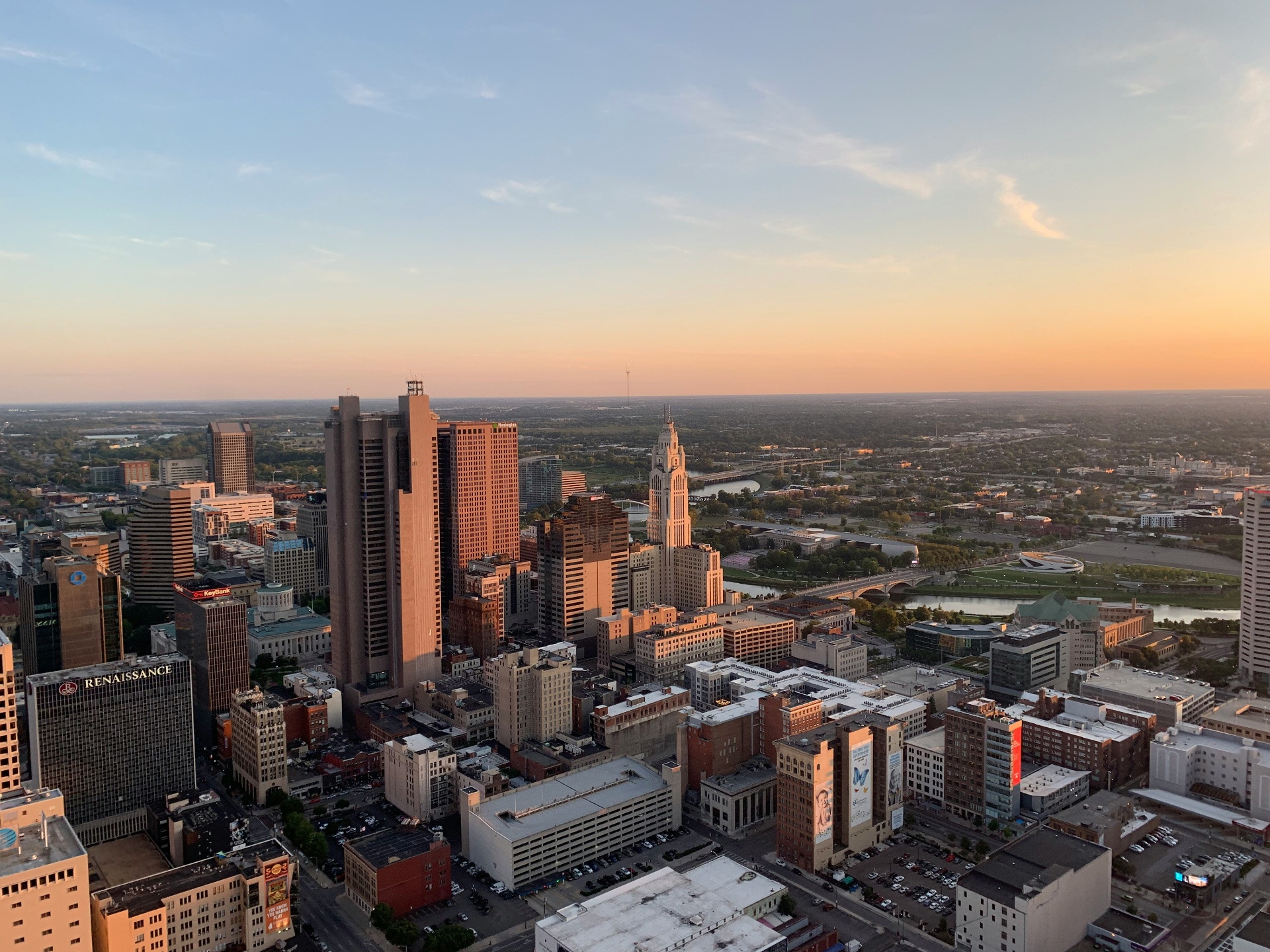
Ohio's capital and largest city has evolved from a government and university town into one of the Midwest's most dynamic tech and finance hubs. Intel's $20B semiconductor campus is reshaping the employment base for a generation.

A logistics and life sciences powerhouse sitting at the crossroads of American commerce. Indy's business-friendly environment and cost structure continue to attract corporate relocations from both coasts at an accelerating pace.

Home to 10 Fortune 500 companies per capita — more than almost any comparably sized American city. Cincinnati's urban core is experiencing a renaissance of residential demand driven by young professionals priced out of coastal metros.

South Bend's transformation under a decade of intentional urban investment has produced one of the most compelling risk-adjusted multifamily entry points in the Midwest. Low basis, rising rents, constrained supply.

A logistics titan anchored by UPS's global air hub and Amazon's expanding distribution network. Louisville's healthcare sector — anchored by Humana and Norton Healthcare — provides employment stability that insulates the rental market through cycles.

The narrative hasn't caught up with the reality. Detroit's Midtown and New Center neighborhoods are generating rental yields unavailable in any Tier 1 market while EV manufacturing investment brings a new employment base that is only beginning to absorb into the housing market.
The Midwest's most compelling growth story.
Columbus is a study in compounding fundamentals. Ohio State University produces 15,000+ graduates annually, a meaningful share of whom are choosing to stay. The city's tech sector has grown 34% over five years. And Intel's landmark $20 billion investment in a semiconductor manufacturing campus outside Columbus is expected to create 10,000 direct jobs and 40,000 indirect — a seismic employment event that has not yet been fully priced into the multifamily market.
For multifamily investors, the structural picture is compelling: rent-to-income ratios remain below the national average, construction pipelines are tightening, and suburban submarkets are absorbing demand that the urban core can no longer accommodate at accessible price points.
What is actually moving these markets forward.
Midwest metros are absorbing corporate headquarters and regional offices at an accelerating pace as executives weigh quality-of-life and cost-per-employee against coastal alternatives. Columbus, Indianapolis, and Cincinnati lead nationally in corporate relocation activity per capita since 2021.
The CHIPS Act and Inflation Reduction Act have directed hundreds of billions into domestic manufacturing — and the Midwest is the primary beneficiary. Intel's Ohio campus, Ford's Michigan EV plants, and Eli Lilly's Indiana expansion represent a structural employment shift that creates durable rental demand for 20+ years.
Net domestic migration data consistently shows the Midwest absorbing professionals from the Northeast and West Coast. Remote work permanence has decoupled employment from geography — and the Midwest's housing affordability and quality of life are winning the competition for mobile talent.
OSU, Purdue, University of Michigan, Notre Dame — the Midwest's research university infrastructure produces a talent pipeline that feeds directly into the tech, healthcare, and advanced manufacturing sectors. Graduate retention rates are climbing as local employment opportunities expand.
Cleveland Clinic, Nationwide Children's, IU Health, Beaumont — the Midwest's healthcare infrastructure is one of its most durable economic assets. Healthcare employment has grown consistently through every recession cycle and continues to expand as an aging national demographic drives demand for services.
The Midwest sits at the intersection of America's rail, highway, and air freight networks. UPS's Louisville hub, Amazon's Indianapolis distribution centers, and Chicago's intermodal logistics complex ensure that any national supply chain investment will disproportionately benefit Midwest employment markets.
Midwest acquisition costs remain 40–60% below comparable Sun Belt assets, providing a margin of safety unavailable in overheated markets while preserving meaningful upside as institutional capital recognition accelerates.
Unlike Sun Belt markets flooded with new construction, Midwest metros have seen constrained development pipelines — a product of tighter municipal zoning, higher construction costs per comparable rents, and more conservative developer behavior.
Midwest renters are not over-leveraged on housing costs. Average rent-to-income ratios across our target markets sit at 22–26%, providing meaningful room for rent growth without displacement risk — a rare condition in today's national housing market.
Aging housing stock and under-managed assets create abundant value-add opportunities. Terra's operational playbook — targeted renovation, professional management, and strategic repositioning — produces forced appreciation independent of market tailwinds.
The numbers behind the thesis.
| Market | Metro Pop. | Pop. Growth | Unemployment | Avg. Rent |
|---|---|---|---|---|
| Columbus, OH | 2.1M | +3.8% | 3.4% | $1,380 |
| Indianapolis, IN | 2.1M | +2.9% | 3.1% | $1,290 |
| Cincinnati, OH | 2.3M | +1.8% | 3.6% | $1,210 |
| Louisville, KY | 1.4M | +1.6% | 3.9% | $1,175 |
| South Bend, IN | 325K | +2.1% | 4.2% | $980 |
| Detroit, MI | 4.4M | +0.8% | 4.8% | $1,140 |
| National Average | — | +0.4% | 3.7% | $1,702 |
Sources: U.S. Census Bureau, BLS, CoStar Group. Data as of Q4 2025.
Average rents across Midwest target markets are 27–43% below the national average, yet median household incomes are only 8–14% below national levels. This structural affordability premium is the foundation of sustainable rental demand that doesn't evaporate in downturns.
No Midwest target market is dependent on a single industry. Columbus balances tech, government, healthcare, and education. Indianapolis balances logistics, life sciences, and finance. This diversification produces employment stability that single-industry markets simply cannot match.
The narrative that the Midwest is losing population is a decade out of date. Columbus and Indianapolis are growing faster than Miami and Seattle on a percentage basis. The migration flows are real, documented, and showing no signs of reversal.
The best real estate investment opportunities are rarely found where everyone is already looking. The Midwest is where fundamentals make sense, where capital can still buy at rational prices, and where the next decade of rental demand is being built — one job announcement at a time.
Want the complete market data package?
Terra investors receive full city-level underwriting reports, rent comps, supply pipeline data, and employment projections — updated quarterly.